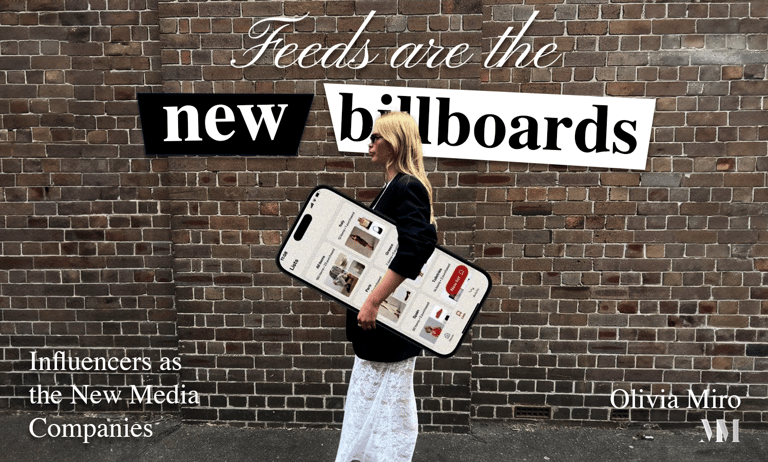
Feeds are the New Billboards
EDITION II
Olivia Miro
11/30/20252 min read
Picture yourself driving down a main street blasting your music, and you see a billboard for a new Nike sneaker that catches your eye. You go home later that day, search up the shoes, and decide whether you are gonna spend that ninety or so dollars. This kind of straightforward, linear marketing is largely outdated now, serving primarily as a last-ditch tactic for major brands. First, it was overtaken by social media, but now content creators don't just engage in one of transactional deals with brands, but rather support a collaborative and marketable relationship between the brand and influencers' image that goes far deeper than ever before. This is the new age of marketing, where content creators are becoming increasingly more essential for a brand's marketable success.
Let's first address why brands continue to invest in these influencer relationships. The short answer is the consumers, because at the end of the day, they drive the market. Going more in-depth, what makes this long-term collaborative partnership so successful with consumers is the authenticity it brings to such a saturated market. To put this in terms of a real-world example, think about Charli D’Amelio’s incredibly successful partnership with Dunkin' Donuts, selling hundreds of thousands of cups within the first five days of its launch (source: https://influencehunter.com/2022/06/15/charli-damelio-and-dunkin-donuts-a-tiktok-influencer-marketing-case-study/). Charli D’Amelio didn’t just promote Dunkin', she reframed the entire brand through the lens of her own identity. Her followers constantly look to her for cues on how to act, dress, and even what to consume, constantly asking themselves, “How can I be more like Charli?” By openly integrating Dunkin into her daily routine and making it part of her personal aesthetic, she redirected that aspirational attention toward the brand. Dunkin wasn’t just a coffee anymore; it became a lifestyle accessory tied to Charli’s image.
This increasingly popular influencer driven marketing formula is clearly not unique to Dunkin, other notable examples include Poppi and Alix Earle, or Tarte's constant collaboration with online talent. These partnerships all follow the same core pattern; creators do not just advertise a product, they fold it into lifestyle, making it feel like an extension of their personal brand. When Alix Earle features Poppi in her Get Ready With Me videos, or when Tarte sends creators on high visibility brand trips, these products become embedded in daily routines that audiences already trust. This seamless integration transforms simple promotions into cultural moments. Further, this drives consumer behavior not through persuasion, but through identification.
So what does this tell us about the future of marketing? Creator-driven branding isn’t a phase, it reflects a permanent shift in how consumers build trust. According to Sprout Social, 61% of consumers trust influencer recommendations more than traditional ads, making creators the true gateway to purchase decisions. And this influence is only growing, Forbes projects the creator economy could nearly double to $480 billion by 2027. As budgets continue moving toward long-term partnerships and authentic storytelling, influencers won’t just support marketing strategies, they’ll define them. This shift signals a fundamental restructuring of the advertising landscape. Creators operate almost like personalized media channels, shaping taste and culture in real time. Brands that embrace this transformation early will be better positioned to meet consumers where they already are, in the feeds, stories, and daily routines curated by the creators they trust most.
Cover Design by Claire Abbo
Feeds are the New Billboards- Influencers as the New Media Companies
By Olivia Miro