How Brands Profit
The Way Brands Cash In on Our New Me Ambitions
EDITION III
Aidan Lane
2/12/20264 min read
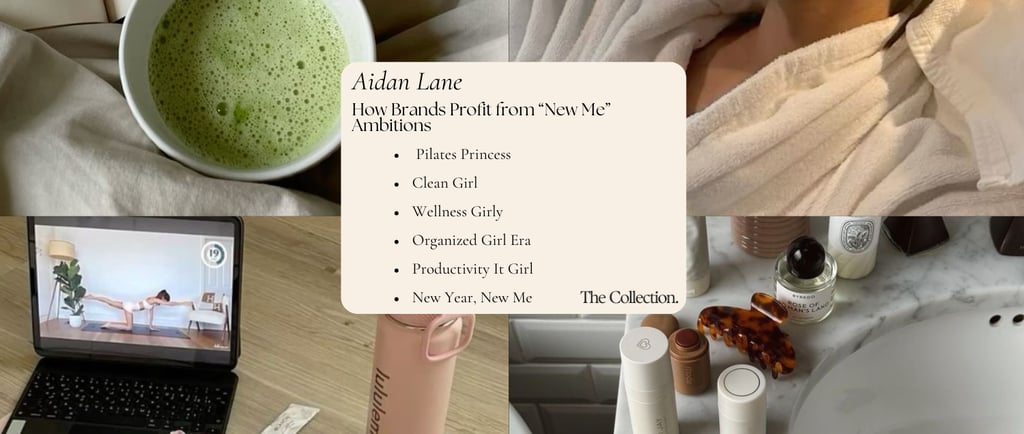
Cover Design by Grace Allen
How Brands Cash In on Our New Me Ambitions
By Aidan Lane
Every January, it feels like Gen-Z collectively decides to become “better people,” and the proof is in the drinks, the leggings, and the planners we suddenly swear by. Overnight, feeds shift from finals chaos to iced matcha in glass cups with glass straws, Rhode eye patches, and full-length mirror videos of people narrating their “soft girl wellness era.” We are not just trying to wake up earlier or drink more water; we are trying to look like the kind of person who does. Brands know that better than anyone, and they have turned “new year, new me” into a niche economy of hyper-specific archetypes: the Clean Girl, the Pilates Princess, the Wellness Girly, the Gym Girl, the Y2K It Girl, and that’s just to name a few. Each comes with its own starter pack, and each starter pack is branded.
Alex Cooper’s Unwell is one of the clearest examples of how granular this has become. Her whole brand lives between chaos and self-awareness: she literally names the company Unwell, then bottles that feeling into hydration and energy drinks aimed at women who are ambitious, exhausted, and over being sold perfection. Unwell started with hydration products and has expanded into electrolyte mixes and energy drinks with fruity, fun flavors that feel more “hot girl on the go” than “serious marathon training.” The branding leans into being human and burnt out, not flawlessly disciplined, which lets girls who feel intimidated by rigid wellness culture still buy into a self-aware version of it.
Gut health has become its own aesthetic; something Gen Z has been continuously tapping into. Poppi and Olipop have turned soda into a wellness accessory, packaging prebiotic drinks in pastel, TikTok-friendly cans that promise digestion support and low sugar while still curbing the craving for cola and root beer. The Coconut Cult takes it even further into “cult favorite” territory: their ultra-potent coconut yogurt is marketed as “super-live” probiotic coconut yogurt, with billions of probiotics in each jar. Every spoonful is framed as “life-changing,” “gut-loving,” and the solution to a flat stomach. The brand literally invites you to “join the cult,” turning a yogurt into an invitation into the wellness culture.
Kourtney Kardashian’s Lemme sits at the intersection of wellness, celebrity, and pure persona-chasing. The brand launched with targeted gummy supplements like Lemme Chill for stress, Lemme Focus for productivity, and Lemme Sleep for the “rest is my new personality” crowd, each meant to seamlessly enter into a different era of your life. As wellness aesthetics rotate, Lemme keeps adding hyper-specific variants—debloating gummies for the gut-obsessed girlies, and the infamous Lemme Purr, a vaginal health gummy marketed as helping you “smell better,” which went viral both for its cat-themed promo and for the medical backlash it sparked. This was made humorous by the fact that Kourtney Kardashian, who has zero medical credentials, became the face of it anyway, proving that for many consumers the vibe, branding, and Kardashian stamp matter way more than actual science.The pattern is obvious: as soon as a new “issue” or aesthetic spikes online, sleep, stress, gut health, “feminine care,” there is a gummy to match, in a pastel bottle that looks good on your nightstand.
Social media turns all of this into a January content loop. “Reset my life with me” videos double as mini commercials: hydration routine (Unwell), gut routine (Poppi, Olipop, Coconut Cult), stress routine (Lemme Chill), sleep routine (Lemme Sleep), “feminine care” routine (Lemme Purr), workout, planner, and the aesthetic tying it all together. None of the products are technically required to improve your life—if anything, they don’t improve anything—but together, they create a character that is hard to detach from.
The tension is that this all plays on very real Gen Z anxieties. We are more informed about wellness, gut health, sleep, and stress than previous generations, but we are also more exhausted and more online. These brands position themselves as the antidote to unrealistic wellness narratives, offering better-for-you drinks, yogurts, and gummies for people who are tired, busy, and imperfect, while still operating inside the same consumer logic.
Maybe the most honest version of “new year, new me” sits somewhere in the middle. You still drink your Unwell or your Poppi or eat your Coconut Cult if you genuinely like them. You still take your Lemme Sleep if it helps you stick to an earlier bedtime. Brands are consistently capitalizing on these new Gen-Z lifestyle changes every year because they’ve mastered how to turn personal growth into a product.
I am not the only person who has gone through something like this; however, the amount of ads promoting the product overrules my voice as a customer. A simple click and purchase has only ever hurt me and my bank account, but never the company behind the product. Buying items online is my vice, as I’m sure it is for many students. Finding products is not the issue; I have gotten ads from TikTok, Instagram, Snapchat, and YouTube trying to sell me the same thing. The problem, however, is that I know nothing about the company or how the product came to be; there is no connection. Nevertheless, there is something good to be said about social media and new businesses.
Because social media algorithms prioritize content that drives engagement and sales, growing a business online has become one of the most accessible and effective strategies for new brands. Once you capture your target audience's attention, your business can thrive. You just have to cut through all of the internet slop, which is easier said than done. On the consumer end, however, it’s easier now than ever to find a new company online and get to know the faces behind the operation. Supporting a new business can be as simple as a like and comment, meaning your bank account won’t get hurt in the process! For example, one of our clients, StudioMax, has a fabulous online presence. Their goals are clear: give killer haircuts and blowouts for reasonable prices. They post content about where their building is, the services they offer, and who they are behind the business.
While service job reviews will always lean more toward truthfulness, products may not, and to fix that, businesses need to post their why and their how. Putting a lived story behind your brand will connect you with your buyers, and luckily, authenticity is what connects people to a product or company. People want to connect with real people, not just viral products. Posting videos or photos of behind-the-scenes and vulnerable moments of starting a business will reach people even if they cannot fully relate. Everyone has faced hardships, and we yearn to hear similar stories to make us feel better. Connecting with viewers and potential consumers can be hard, but once you earn their trust, you can guarantee good business.